
On October 31, 2025, the three-day 26th Annual General Meeting (AGM) of the Developing Countries Vaccine Manufacturers Network (DCVMN) concluded in Bali, Indonesia. This summit, co-hosted by Indonesia's state-owned vaccine manufacturer PT Bio Farma, was held under the theme "Advancing Innovation & Building Resilient Vaccine Ecosystem for a Safer World!".
The summit gathered over 40 vaccine manufacturers from developing countries, as well as hundreds of global health leaders, policymakers, regulatory agency representatives, and industry experts from key international organizations including the International Finance Corporation (IFC) of the World Bank Group, the Asian Development Bank (ADB), the Gates Foundation (GF), PATH, the Clinton Health Access Initiative (CHAI), the World Health Organization (WHO), Gavi (the Vaccine Alliance), UNICEF, the Coalition for Epidemic Preparedness Innovations (CEPI), the Pan American Health Organization (PAHO), the Africa Centres for Disease Control and Prevention (Africa CDC), the Regionalized Vaccine Manufacturing Collaborative (RVMC), the International Vaccine Institute (IVI), Hilleman Laboratories, and Institut Pasteur.
This AGM marked a key "inflection point": the Global South is transforming from its traditional role as "recipient" to becoming a "builder" and core force in global health security. The discussions culminated in a clear consensus: the path to a "safer world" requires a new paradigm, one that relies on innovative financial mechanisms, deep regulatory coordination and reliance, and predictable, sustainable procurement models.
In the construction of this new paradigm, a Chinese delegation composed of 15 vaccine companies, including members of Council for the Promotion of International Vaccine Cooperation (CPIVC) of China Association for Vaccines (CAV), played an indispensable role in the AGM's various key topics, demonstrating China's determination and strength as a leader, innovator, and core partner in the global public health arena.
China's Vaccine Industry Deeply Participates, Contributing "Chinese Wisdom" to Global Challenges
As a key force within the DCVMN network, several members of CPIVC were deeply participated in this year's AGM. Representatives from companies including AIM Vaccine Co., Ltd., CanSino Biologics, Inc., China National Biotec Group Limited (CNBG), Chongqing Zhifei Biological Products Co., Ltd., the Institute of Medical Biology of Chinese Academy of Medical Sciences (IMBCAMS), Shenzhen Kangtai Biological Products Co., Ltd., Sinovac Biotech Ltd., Walvax Biotechnology Co., Ltd., and Xiamen Innovax Biotech Co., Ltd., as well as representatives from Changchun BCHT Biotechnology Co., Ltd. (which will rejoin DCVMN effective January 1, 2026), jointly attended the meeting.
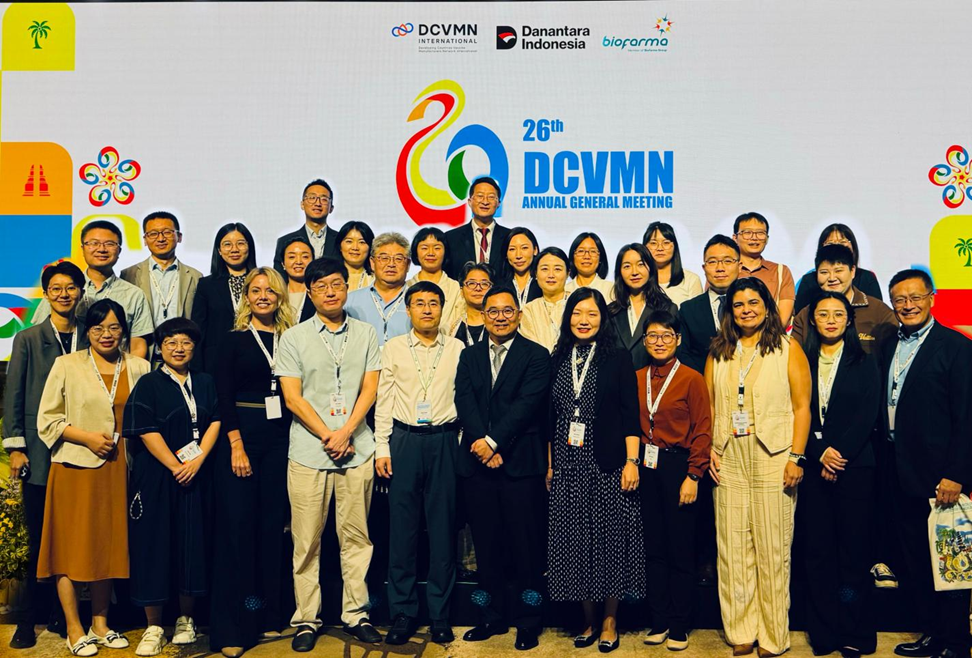
Photo of some delegates from the Chinese vaccine industry
China's 10 DCVMN member vaccine companies actively participated in the high-level dialogues and technical seminars of the AGM. The depth and breadth of the Chinese industry's contribution were evident from the number of its senior executives and experts invited to serve as chairs and speakers in key strategic sessions.
The contributions from Chinese companies and experts precisely targeted several of the AGM's core themes:
Guiding Dialogue on Technical Innovation: Mr. Andrew Wong from Walvax chaired the "Novel Technologies" session. This session highlighted practical bioprocess adaptations and novel delivery systems that can increase flexibility and lower barriers to adoption.
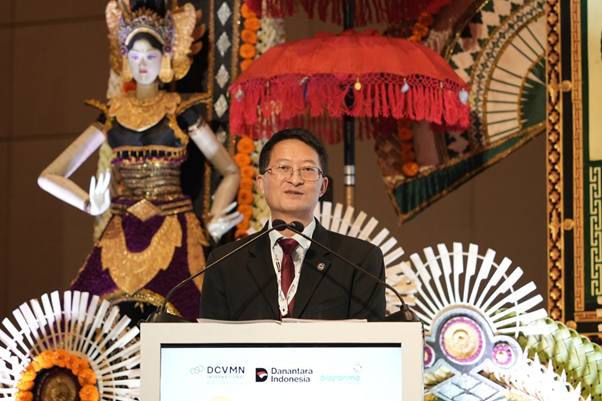
Mr. Andrew Wong from Walvax chairing the Novel Technologies session
Cracking Core Regulatory Bottlenecks: Prof. Wenxi Tang from China Pharmaceutical University spoke at the "Regulatory Strategies" session. This session focused on the persistent challenges facing developing country manufacturers, including "duplicate inspections, lengthy review timelines and the need for harmonized pathways that reduce unnecessary repetition".
Showcasing Advanced Chinese R&D: Ms. Meng Li from CNBG shared the development progress of its "hexavalent reassortant rotavirus live vaccine," displaying China's robust capabilities in cutting-edge vaccine research and development to the world.
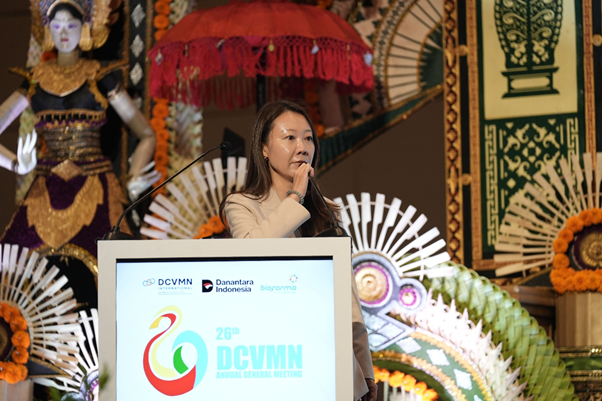
Ms. Meng Li of CNBG speaking at the meeting
Sharing the "Asian Success Blueprint": Ms. Li Meng from CNBG and Mr. Weining Meng from Sinovac and Ms. Kai Wen from BioKangtai spoke at the "Roar of Asia" session. This session brought together manufacturers from China, Bangladesh, and India to reflect on their growth and the shared challenges in global market access.
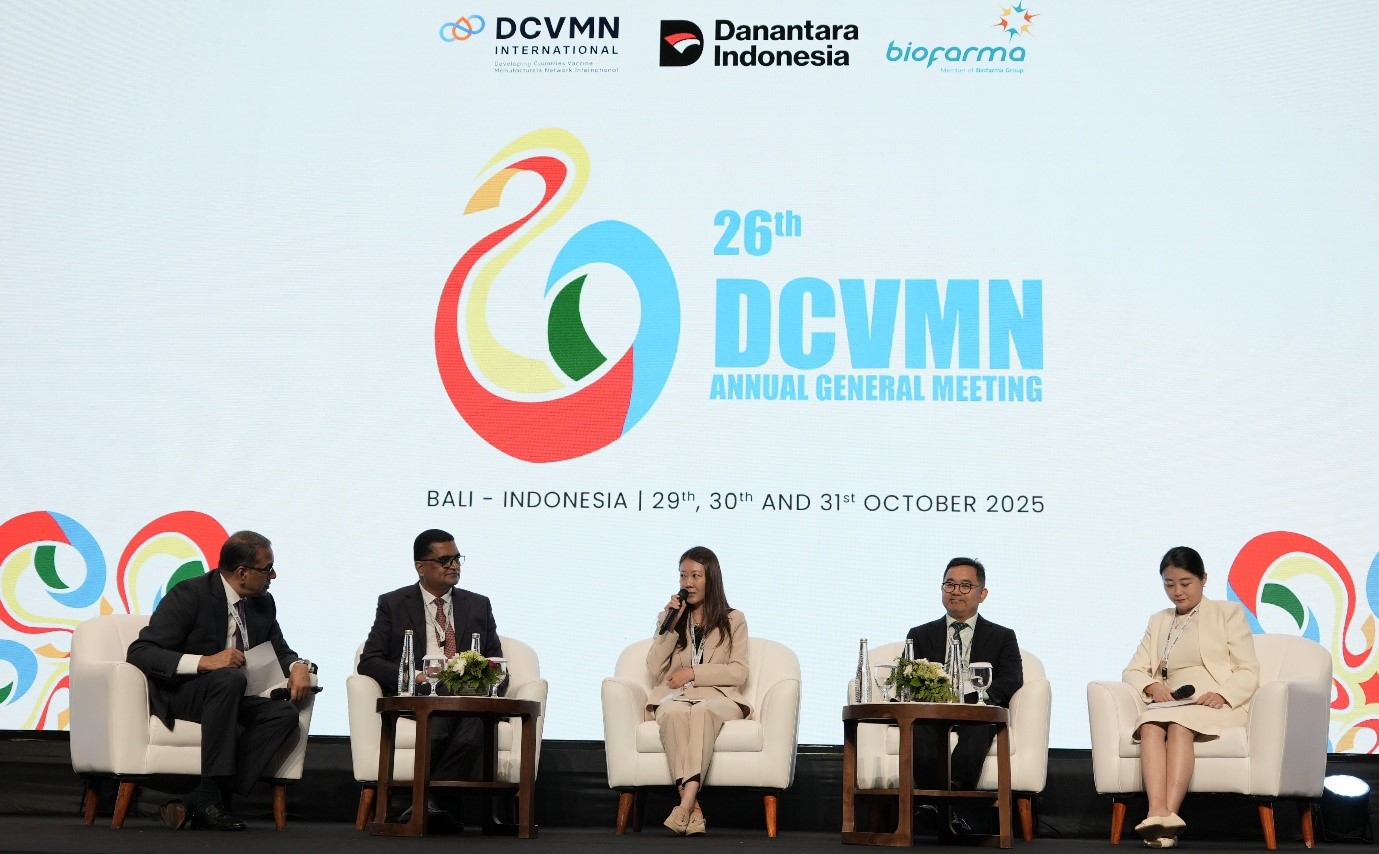
Ms. Meng Li of CNBG (3rd left), Mr. Weining Meng of Sinovac (2nd right), and Ms. Kai Wen of BioKangtai (1st right) sharing at the meeting
Grasping the New Landscape of Global Health: High-Level Dialogue Sets the Tone
The AGM's opening Inaugural Session set the tone for global health cooperation for the next ten years. Leaders of the world's major health organizations sent a clear signal: DCVMN has become an irreplaceable cornerstone of the global health security architecture.
Dr. Tedros Adhanom Ghebreyesus, Director General of WHO, in his message, thanked DCVMN member companies for their "central role" in restoring global childhood vaccination coverage to pre-pandemic levels and called them "critical partners" in the WHO's mRNA technology transfer program.
Dr. Sania Nishtar, CEO of Gavi, noted that global health is facing "shifting foundations," including funding pressures and disinformation. She reiterated that DCVMN members are the "major suppliers" of UNICEF/Gavi-procured vaccines.
Dr. Richard Hatchett, CEO of CEPI, delivered candid remarks, calling the current financial uncertainty "scary times" but also stating that it provides an "opening for bold leadership" and new partnerships.
Dr. Abebe Genetu Bayih, representing Africa CDC, outlined clear milestones for Africa's path to vaccine self-sustainability and emphasized the strategic role of the "African Pooled Procurement Mechanism" (APPM) in improving affordability and access.
These opening addresses jointly established the core mission of the AGM. The statements from WHO and Gavi confirmed that DCVMN (and its important Chinese members) has transitioned from its past status as "supplier" to that of an indispensable "strategic partner".
Facing the "Funding Winter" and Regional Challenges: Building a Sustainable Ecosystem
In the face of a "funding winter" in global health and the harsh realities of regionalization, the core discussions of the AGM focused on how to build truly sustainable commercial and procurement models.
The "Funding Winter" and New Financing Models
The "Global Economic Outlook 2025" session sounded the alarm. Data shows that global health funding is projected to decline by 21% between 2024 and 2025, which is expected to result in a $75 billion funding gap for global health initiatives like WHO, Gavi, and the Global Fund. Facing this "funding winter," participants agreed that global health financing is shifting from traditional donor models to "innovative financial mechanisms" and "public-private partnerships" (PPPs). "The Future of Immunisation" session echoed this view, noting Gavi's evolution from a "direct funder to catalytic enabler" to incentivize increased domestic health investment.
Africa's Ambition and the "Three-Point Plan"
The "Building a Resilient Vaccine Ecosystem in Africa" session confronted the continent's severe realities. The African Union (AU) has proposed the ambitious goal of "manufacturing 60% of the continent's vaccine needs by 2040", but the session revealed that African manufacturers face multiple obstacles. The WHO Prequalification (PQ) process remains a "perceived red tape bottleneck," the buyer landscape is "fragmented and unpredictable," and a "lack of sustainable offtake agreements" undermines scale-up efforts.
To address these challenges, the expert panel proposed a clear "three-point plan for acceleration": 1. Regulatory harmonization; 2. Accelerated pooled procurement; 3. Refined procurement modalities.
The "Asian Blueprint": The Success of PAHO and ASEAN
In contrast to the challenges facing Africa, the "Pooled Procurement and Sustainable Financing Mechanisms" session discussed the experience of the Pan American Health Organization (PAHO). PAHO's "Revolving Fund" is hailed as the "gold standard" of regional procurement, with its 40+ year history proving the unified procurement model is entirely feasible.
Meanwhile, the "ASEAN: The Vibrant Region for Collaborations & Partnerships" session highlighted that ASEAN has become one of the most productive vaccine regions, boasting the "highest number of manufacturers and WHO-prequalified vaccines".
Tackling Core Bottlenecks: Regulation, Talent, and Future Challenges
A resilient ecosystem requires not only funding and markets but also efficient regulation, sufficient talent, and the ability to respond to future threats.
Experts at the "Regulatory Strategies" session pointed to persistent challenges, including "duplicate inspections, lengthy review timelines and the need for harmonized pathways that reduce unnecessary repetition".
The "Talent Development" session focused on the scarcity of specialized human capital, seen as the industry's "ultimate bottleneck," warning that a "War for Talent" is imminent.
The AGM also looked at future threats. The "Advancing Innovation & Leveraging AI" session explored how AI can accelerate vaccine development. The "Unravelling Pandemic Agreement and Pandemic Fund" session concluded that the global architecture must shift from "reactive response" to "proactive prevention" through "sustainable, 'peace-time' financing". The "AMR & Role of Novel Vaccines" session explored the next major scientific challenge and the business logic for investment.
Chinese Leadership Recognized Again: A New Milestone in DCVMN's Governance Structure
During the closed-door General Assembly of this year's AGM, DCVMN's governance structure also reached an important milestone, fully reflecting the high recognition of the Chinese vaccine industry's leadership by peers across the developing world.
The meeting announced that Mr. Andrew Wong from Walvax was re-elected as a member of the DCVMN Board of Directors for the second three-year term, effective January 1, 2026. Andrew Wong is the sole representative from China on the DCVMN Board. His successful re-election signifies the network's high affirmation of his outstanding leadership, as well as an acknowledgment of the key role China's vaccine industry plays in technological innovation, global supply and strategic foresight.
Furthermore, the meeting approved the re-admission of Changchun BCHT Biotechnology Co., whose DCVMN membership will also officially take effect on January 1, 2026.
With the return of Changchun BCHT, the total number of Chinese member companies in the DCVMN network will reach 10, becoming the country with the second-largest number of members in DCVMN. This is not just a number, but a powerful symbol of the scale, quality standards, and global influence of China's vaccine industry.
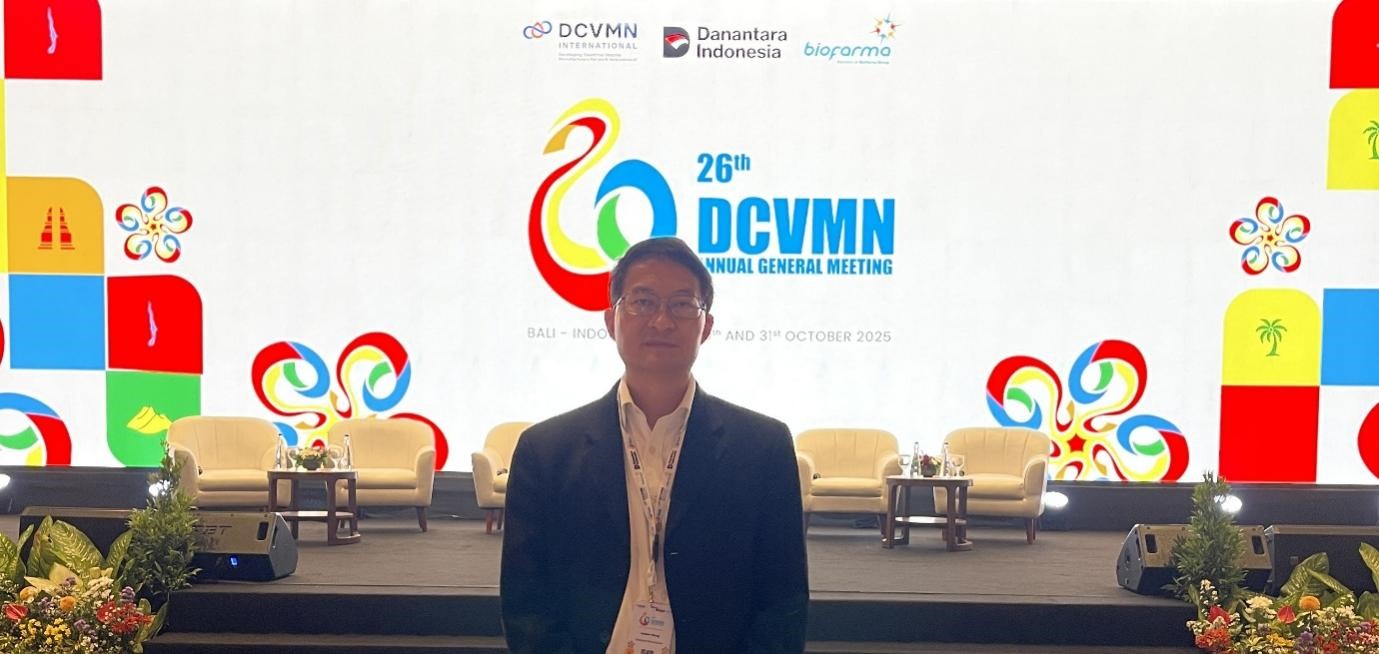
Mr. Andrew Wong of Walvax re-elected as a DCVMN Board Member
Looking to the Future: 27th AGM to be Held in Beijing
At the conclusion of the annual meeting, Mr. Rajinder Suri, CEO of DCVMN, announced the significant news: the 27th DCVMN Annual General Meeting will be held in Beijing in 2026. This announcement was met with great enthusiasm. The next AGM will provide an excellent opportunity for more than 40 vaccine manufacturers from developing countries and international organizations to learn about China's burgeoning vaccine industry and expand cooperation.
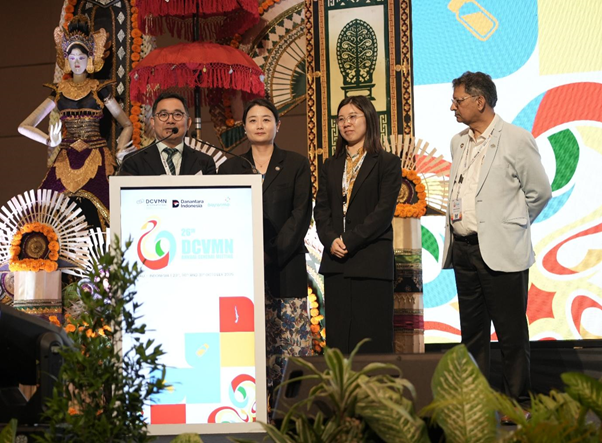
Announcing the 2026 DCVMN AGM will be held in Beijing, representatives of the Chinese host companies speak. From left: Mr.Weining Meng (Sinovac), Ms. Kai Wen (Kangtai Biologicals), Ms. Hong Fan (Zhifei Biological), Mr. Rajinder Suri (DCVMN CEO)
Conclusion
The 26th DCVMN Annual General Meeting in Bali successfully forged a unified vision and a clear roadmap for the Global South to build a more equitable and resilient vaccine ecosystem. Facing severe challenges in funding, regulation, and market access, the 10 member companies of the CPIVC branch of the China Association for Vaccines, as a core pillar of DCVMN, demonstrated strong innovation capabilities and a sense of responsibility. With the next AGM set to be hosted in Beijing, China's vaccine industry is prepared to further deepen its cooperation with global partners, jointly advancing the noble mission of "creating a safer world".


 京公网安备 11010802041931号 © 2024 cpivc.com